What is an accountability partner?
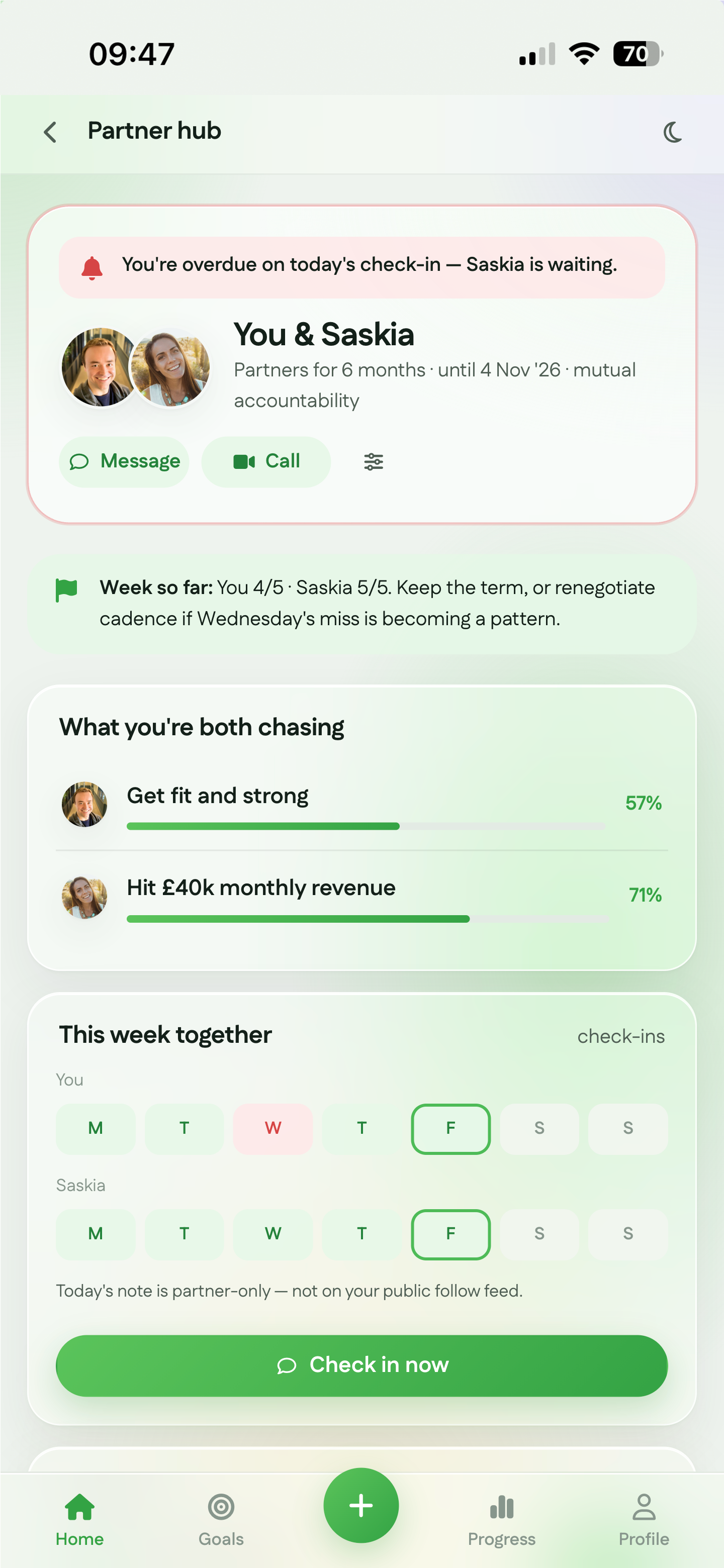
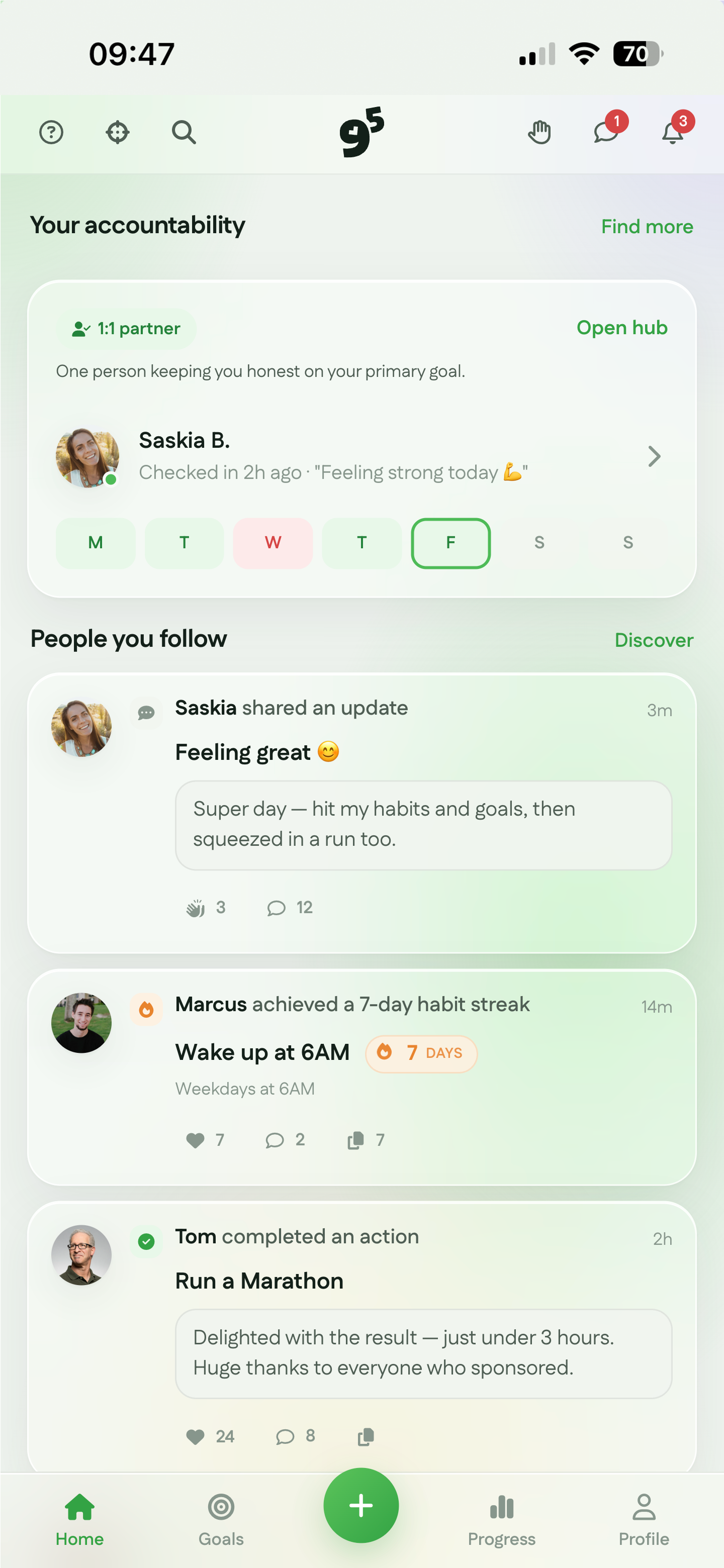
An accountability partner is someone you report your progress to, on a rhythm you both agree. You each have a goal. You each say whether you did the work. They are a peer, not a coach and not a boss. The value is that your follow-through is witnessed, so quitting is no longer a private edit. On 95, that person can be a friend you invite, or someone the app matches you with.
How do I find an accountability partner?
Decide the goal and the cadence first, in language a stranger could check. Then either invite a friend or colleague, which you can do on the Free plan, or upgrade to Premium and let 95 match you with an accountability partner from the community. Matching looks at your goal, time zone, intensity, and how you like to communicate. Give the first week or two a fair trial before you decide it is the right fit.
What makes a good accountability partner?
Reliability in small things. They reply. They remember what you said you would do. They can be warm or direct, as long as you have agreed which. They do not need to share your exact goal. A founder and a runner can partner well if the check-in time and the level of honesty match. The wrong partner is not a harsh one. It is a silent one. Look for someone who will still be there on an ordinary Thursday.
Can I find an accountability partner for free?
You can start for free. The Free plan includes one goal, unlimited habits and actions, productivity reporting, and the chance to invite a friend or colleague as your accountability partner, on the web app, iOS, or Android. Finding an accountability partner from the wider 95 community, partner matching, unlimited partners, and accountability groups are part of Premium.
How is an accountability partner different from an accountability group?
A partner is one-to-one. You get depth, privacy, and a single person who knows the detail of your goal. An accountability group adds more people, shared rituals, and a sense that showing up is simply what the room does. Groups on 95 are Premium. Plenty of members use a partner for the goal that needs quiet attention, and a group for the goal that benefits from company.
How often should accountability partners check in?
As often as the goal requires, and no more often than you will actually do. Daily suits training, writing, and habits you are rebuilding. A weekday rhythm suits deep work. Weekly suits bigger milestones, as long as the update is specific. The mistake is choosing a daily check-in to look serious, then resenting it by Thursday. Pick the rhythm of your ordinary week, then protect it.
What if my accountability partner stops replying?
Wait a couple of days, then send one clear note. Ask if they want to reset the cadence or pause. If the silence continues, treat it as a mismatch, not a verdict on your goal. On Premium you can match again without an awkward conversation. On Free you can invite someone else. A partnership only works while both people are in it. A kind ending beats a chat that only exists in theory.
Which goals work with an accountability partner?
Almost any goal you can describe in a sentence and repeat. Training, study, writing, shipping work, sleep, language practice, and habits you are trying to leave. The weak fit is a goal you cannot observe. “Be more confident” needs translating into actions: one difficult conversation a week, a talk rehearsed, a post published. If you can tick it, an accountability partner can support it.







 +
+